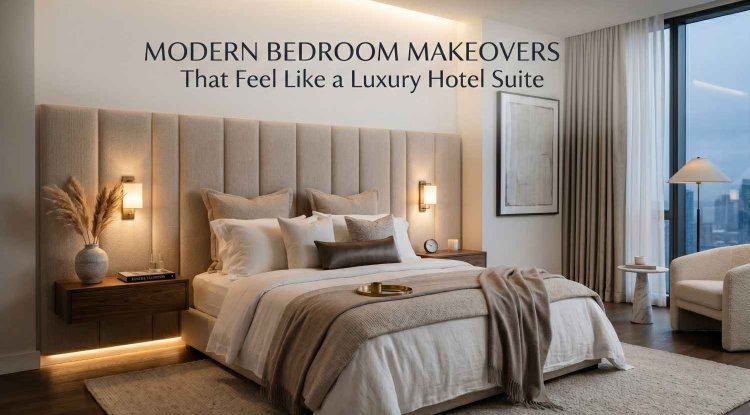
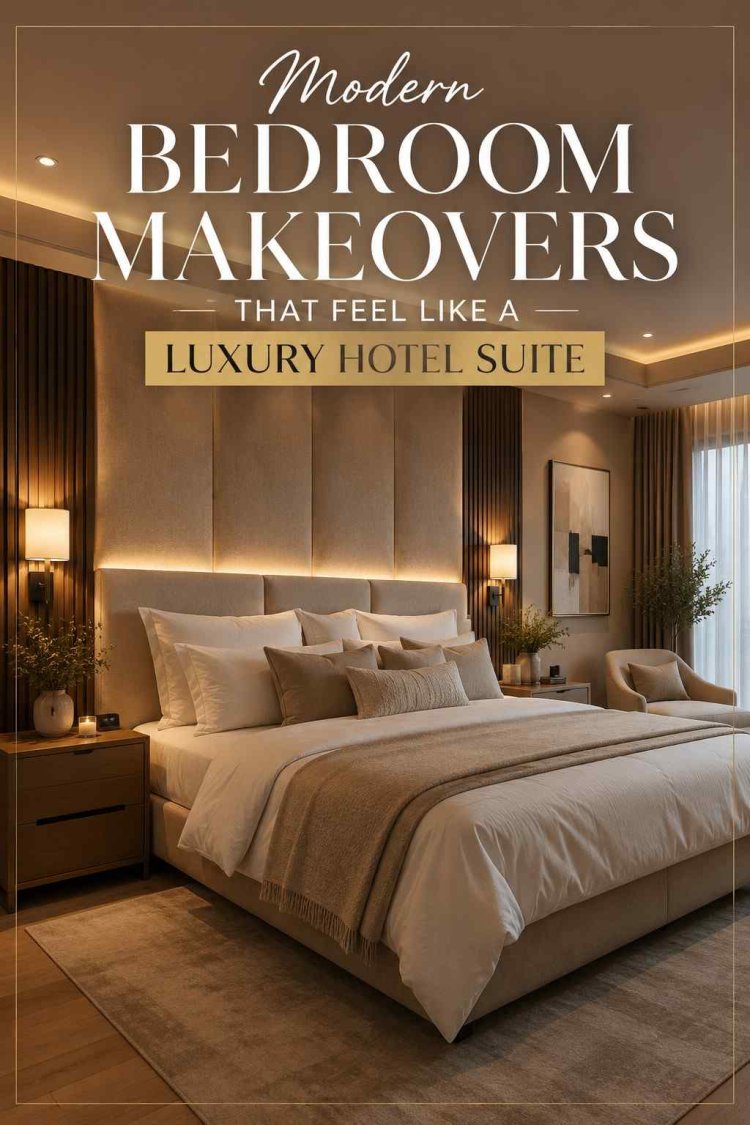
Modern Bedroom Makeovers That Feel Like a Luxury Hotel Suite
Transform your bedroom into a luxury hotel suite with this step-by-step modern makeover guide. Learn how to design a calm, aesthetic, and high-end bedroom using minimalist furniture, layered bedding, soft lighting, smart storage, and elegant decor. Perfect for Pinterest-inspired bedroom ideas, luxury interior trends, and modern home styling in 2026.
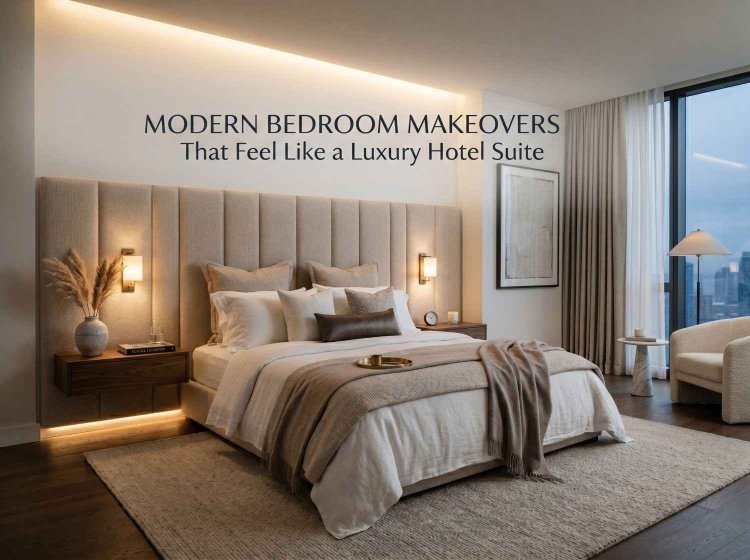
A bedroom is no longer just a place to sleep. In modern interior design trends, it has evolved into something much more personal—a private luxury retreat, a calm escape from daily stress, and a space that reflects lifestyle, taste, and emotional comfort. The most popular design inspiration today comes from luxury hotel suites, where every detail is intentional, every corner feels expensive, and every moment inside the room feels relaxing.
What makes hotel-style bedrooms so attractive is not just their furniture or lighting—it is the feeling they create. A well-designed hotel suite feels clean, balanced, quiet, and effortlessly premium. The good news is that you don’t need a five-star budget to recreate this experience. With the right design strategy, even a simple bedroom can be transformed into a modern luxury aesthetic space that feels like a high-end resort room.
This article will guide you step-by-step through the entire transformation process. In this first part, we will focus on the foundation of luxury bedroom design, including layout planning, color selection, bed positioning, and the overall atmosphere that defines a hotel-inspired space.
1. The Foundation: Creating a Hotel-Inspired Layout
Every luxury bedroom starts with one important principle: space matters more than objects. Hotel rooms always feel open, breathable, and uncluttered—even when they are not very large. This effect is achieved through careful planning of layout and furniture placement.
To recreate this at home, the first step is to simplify your room visually. Your bed should always be the main focal point. Everything else in the room should support that focal point, not compete with it. Instead of filling every empty corner with furniture or decoration, focus on creating open walking space around the bed.
Symmetry also plays a huge role in luxury design. Most high-end hotel suites use balanced arrangements—matching bedside tables, identical lamps, and evenly placed decor elements. This creates a sense of order and calmness that immediately makes the room feel more expensive.
Another important concept is negative space design. In simple terms, this means leaving intentional empty areas in your room. Empty space is not wasted space; it is a luxury feature. It allows the eye to rest and makes the room feel larger and more peaceful.
2. Choosing the Perfect Luxury Color Palette
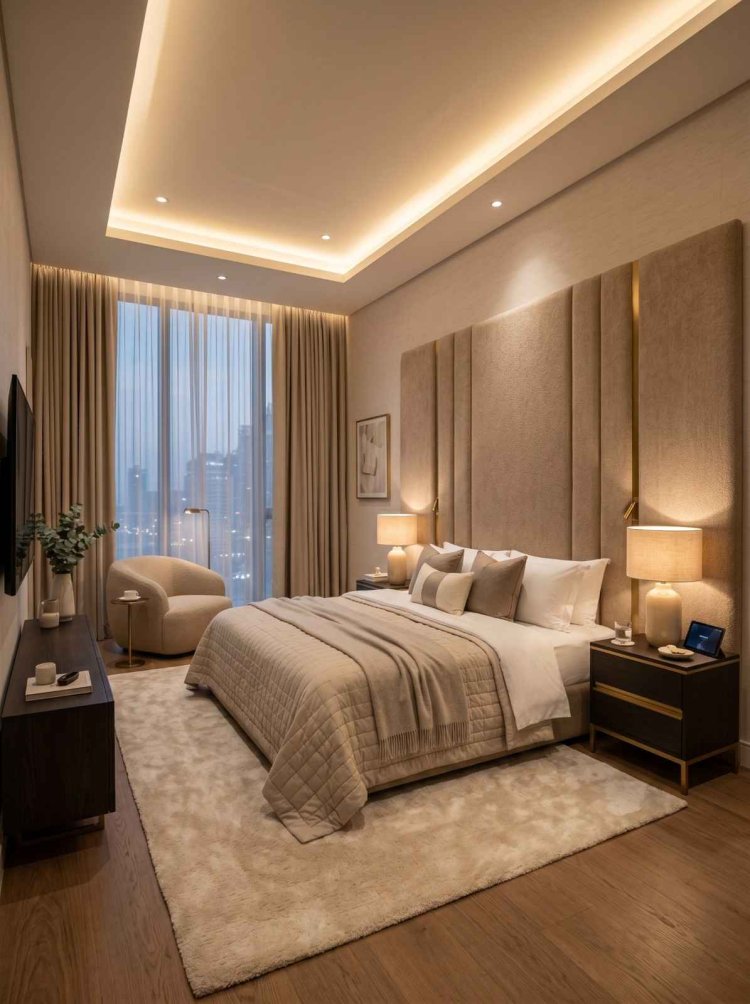
Color is one of the strongest elements in interior design because it defines mood instantly. Luxury hotel suites almost always use neutral, soft, and calming color palettes. These tones create a peaceful environment that feels timeless and elegant.
Some of the most trending luxury bedroom color palettes include:
-
Warm beige, ivory, and sand tones
-
Soft grey with white and taupe combinations
-
Earthy brown mixed with cream accents
-
Muted sage green with neutral backgrounds
-
Black and warm beige contrast for modern luxury style
These colors are widely used in Pinterest-inspired bedroom aesthetics because they create a quiet luxury look—a style that feels expensive without being loud or flashy.
The key idea is consistency. Instead of mixing too many colors, stick to one main palette and build around it. Even your furniture, curtains, and decor should follow the same tone family. This creates visual harmony, which is one of the biggest secrets behind hotel interior design.
3. The Bed: The Heart of the Luxury Suite
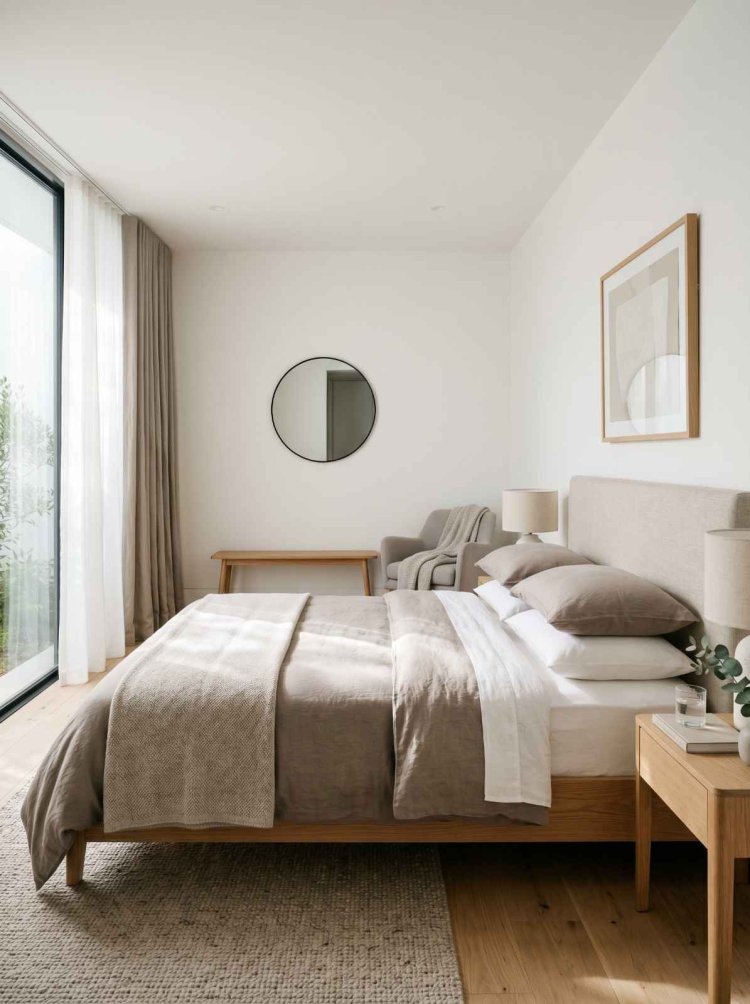
If there is one element that defines a luxury bedroom, it is the bed. In hotel suites, the bed is always designed to look inviting, soft, and perfectly styled. It is not just a sleeping area—it is the visual centerpiece of the entire room.
A luxury hotel-style bed usually features a tall headboard, often upholstered in fabric like linen, velvet, or suede. This gives the room a soft and premium background. The bed frame itself is usually simple and minimal, avoiding heavy carvings or overly decorative designs.
But what truly creates the luxury effect is the bedding styling. High-end hotels use multiple layers to create a rich, comfortable look. This includes fitted sheets, top sheets, thick duvets, and decorative throws. Each layer adds depth and softness, making the bed look like a cloud.
Pillows also play a major role in this setup. Instead of just two pillows, luxury beds often feature multiple layers—sleeping pillows, decorative pillows, and accent cushions arranged in a symmetrical pattern. This structured styling creates a full, plush appearance that immediately signals comfort and elegance.
4. First Impressions: Clean, Minimal, and Intentional
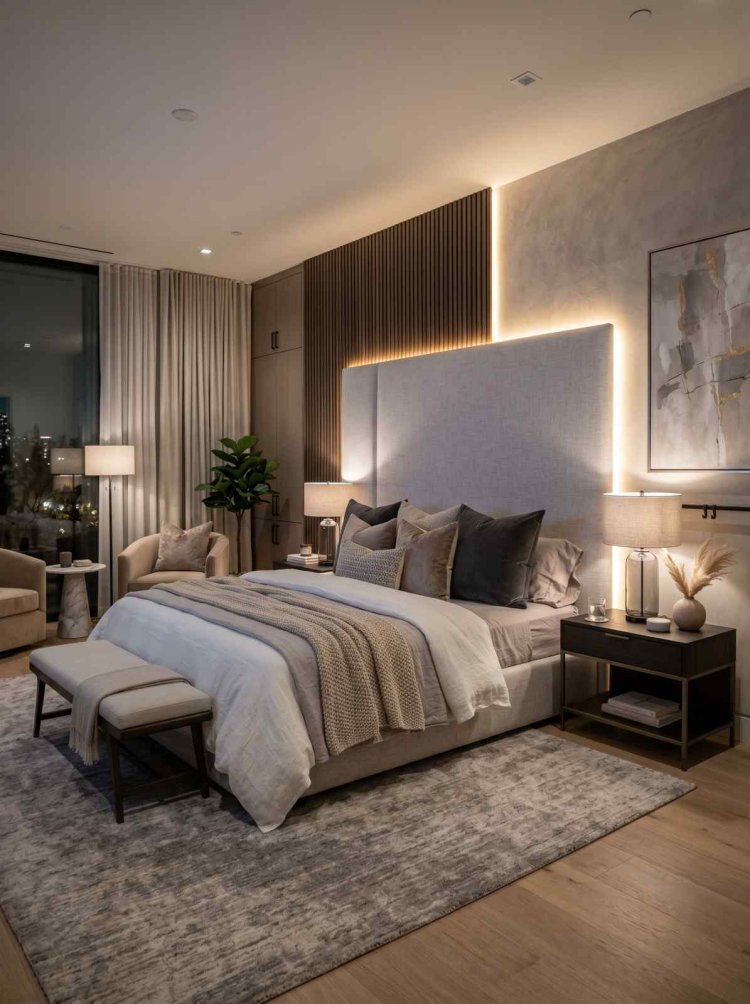
One of the most important principles in hotel-inspired bedroom design is minimalism. Luxury does not come from having more things; it comes from having the right things in the right place.
A clean bedroom automatically feels more expensive. This is why hotel rooms are always spotless and clutter-free. Every item has a purpose, and nothing feels random or unnecessary.
To achieve this effect, remove visual clutter from surfaces like bedside tables, dressers, and floors. Keep only essential items visible—such as a lamp, a book, or a small decorative object. Everything else should be stored out of sight.
Cable management is also essential. Visible wires can instantly break the luxury illusion. Hiding or organizing them helps maintain a smooth and polished look.
Minimal styling is not about emptiness—it is about intentional simplicity. Every item in the room should feel like it belongs and contributes to the overall aesthetic.
5. Setting the Emotional Tone of the Room
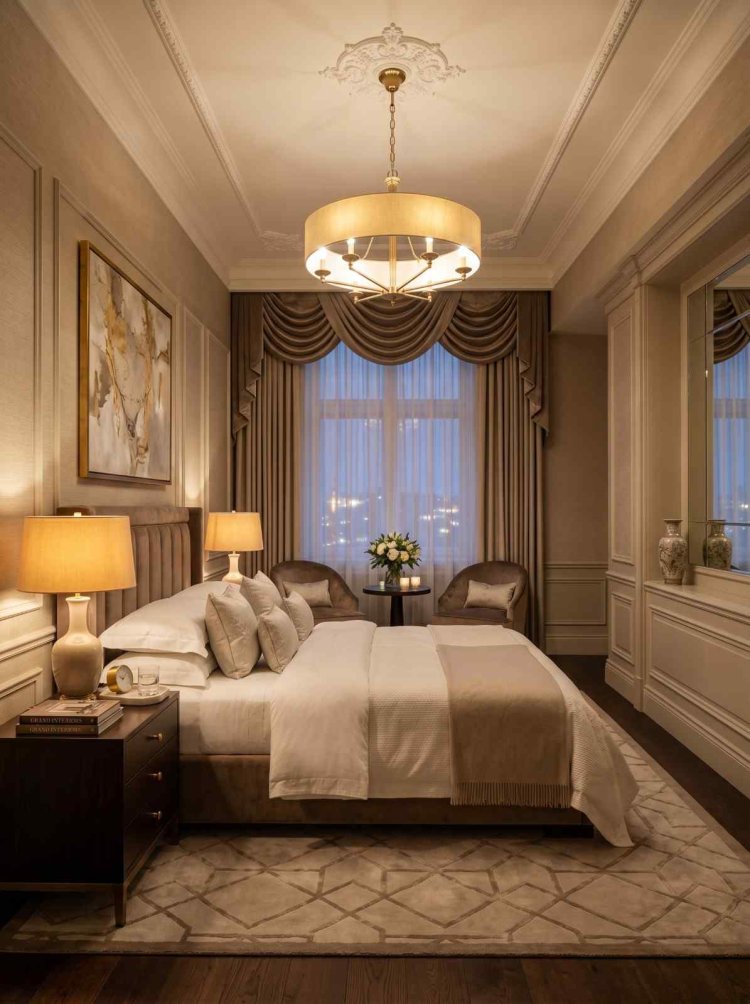
A luxury bedroom is not just visual—it is emotional. When you walk into a hotel suite, you immediately feel calm, relaxed, and slightly disconnected from stress. That feeling is not accidental; it is designed.
To recreate this at home, you need to think beyond furniture and colors. Consider how the room makes you feel. Soft lighting, clean layouts, and gentle color palettes all contribute to emotional comfort.
Even the sound and scent of a room matter. Subtle fragrances like vanilla, lavender, or linen can enhance the feeling of relaxation. Soft curtains, quiet surroundings, and breathable materials all add to the sensory experience.
The goal is to create a space that feels like a personal retreat—a place where your mind automatically relaxes the moment you enter.
Now that the foundation of your luxury hotel-inspired bedroom is in place—layout, color palette, and emotional tone—it’s time to move into the part that creates the most immediate visual impact: the bed experience, textures, and atmosphere layering.
This is where your bedroom stops looking “normal” and starts looking like something pulled straight from a 5-star hotel interior design magazine or a viral Pinterest aesthetic board.
Luxury hotels are not built on expensive objects alone. They are built on layers—layers of fabric, light, texture, and sensory comfort. In this section, we will recreate that same feeling step by step.
6. The Hotel Bed Formula: Layers That Define Luxury
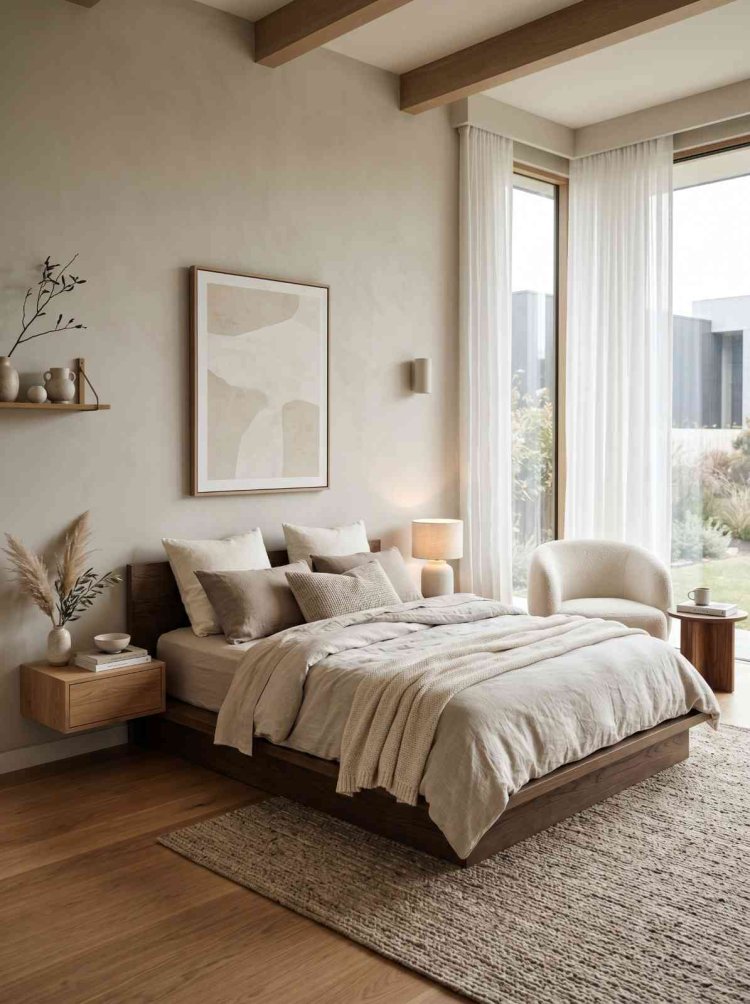
A hotel bed is never simple. It is carefully constructed using multiple layers that create depth, softness, and visual richness. This is what gives that signature “I just want to lie here forever” feeling.
To recreate it, you should build your bed in this exact structure:
First, start with a high-quality fitted sheet. Hotels usually use crisp cotton or sateen fabric because it feels smooth and breathable. This is the base of comfort.
Next, add a top sheet in a neutral tone. This creates a clean visual layer that adds softness without overwhelming the design.
Then comes the duvet or comforter. This is the most visually dominant layer. It should look thick, fluffy, and slightly oversized for that cloud-like effect that is trending heavily in modern bedroom aesthetics.
Finally, add a folded throw blanket at the foot of the bed. This is not just functional—it is a styling detail that signals luxury. It adds depth and makes the bed look professionally designed.
When these layers come together, the result is a bed that looks soft, inviting, and rich in texture.
7. Pillow Architecture: The Secret Luxury Pattern
Pillows are not random in hotel design—they follow a structured visual system. This is what makes hotel beds look symmetrical and expensive.
Start with your sleeping pillows. These should be placed vertically and aligned neatly against the headboard.
Then add decorative pillows in front. These can be slightly smaller and should introduce texture—linen, velvet, or patterned fabric works well.
Finally, place a single accent pillow in the center or slightly overlapping the others. This acts as the visual focal point of the bed styling.
The key here is symmetry and fullness. A bed that looks slightly “over-filled” always feels more luxurious than a flat or minimal one. Hotels use this trick to create that rich, plush appearance that defines their identity.
8. Texture Layering: Turning Simple Into Expensive
If color creates mood, texture creates emotion. This is one of the most important secrets in luxury interior design.
A truly high-end bedroom uses multiple textures in harmony:
Soft linen gives a natural, breathable feel. Velvet adds depth and richness. Knitted throws introduce warmth and coziness. Faux fur creates winter luxury vibes. Even satin or silk accents can introduce subtle shine and elegance.
The trick is not to use one texture, but to combine them in a balanced way. For example, a linen bedsheet with velvet pillows and a knitted throw instantly creates a designer-level aesthetic.
This combination is what makes Pinterest bedroom designs go viral. People are naturally drawn to spaces that feel tactile, soft, and layered.
9. Lighting Meets Bedding: The Emotional Glow Effect
Once your bed is styled, lighting becomes the next layer that enhances its beauty.
Luxury hotel rooms never rely on harsh overhead lights. Instead, they use soft, directional lighting that highlights textures and creates mood.
Warm bedside lamps are essential. They cast a gentle glow that makes the bedding look even softer. Hidden LED strips behind the headboard add depth and create a floating effect. Soft ambient lighting fills the room without overpowering it.
When lighting interacts with layered bedding, the result is cinematic. Shadows become softer, textures become richer, and the entire bed area becomes the emotional center of the room.
This is what gives the “hotel suite at night” aesthetic that is trending across Pinterest and Instagram reels.
10. The Perfect Bed Finish: Crisp, Clean, Intentional
Even with perfect layers, a bed can lose its luxury feel if it is not finished properly. Hotels always focus on precision in the final styling stage.
The sheets must be tightly tucked, with clean corners. The duvet should be smooth with no visible wrinkles. Pillows should be fluffed evenly and aligned perfectly. The throw blanket should be folded neatly or casually draped in a controlled way.
This creates a feeling of order and freshness. It tells the eye that the space is maintained and intentional.
Luxury is not chaos—it is controlled perfection.
11. Sensory Luxury: Beyond What You See
A true hotel experience is not just visual. It engages all senses.
Soft bedding materials make physical contact comfortable. Subtle scents like lavender, vanilla, or fresh linen enhance relaxation. Quiet surroundings improve mental peace. Even airflow and temperature contribute to comfort.
These invisible elements are what turn a bedroom into a retreat. When everything feels soft, calm, and balanced, your mind automatically associates the space with luxury.
12. Furniture Selection: The Quiet Luxury Rule
Luxury hotel suites follow one powerful principle: nothing should feel excessive or visually loud. Every furniture piece is chosen for simplicity, balance, and timeless appeal.
Start with your bedside tables. These should be minimal in design, preferably with clean lines and smooth finishes such as matte wood, stone, or soft neutral paint. Avoid bulky or overly decorative pieces. The goal is to create visual calmness on both sides of the bed.
Next, focus on the wardrobe or storage units. High-end bedrooms use handle-less designs or concealed grips. This creates a seamless look that blends into the wall, making the room feel larger and more refined.
If you include seating, choose a single accent chair or a small lounge corner. It should feel intentional—not crowded. Upholstery in linen, boucle, or soft velvet works best for a modern luxury vibe.
The key idea here is simple: furniture should support the space, not dominate it.
13. Smart Storage: The Invisible Luxury System
One of the most underrated elements of luxury hotel design is how clean everything looks—and that’s because storage is invisible.
To recreate this at home, you need to adopt a hidden storage mindset.
Use under-bed drawers or storage boxes to keep extra items out of sight. Choose wardrobes with internal organizers so everything has a defined place. Avoid leaving items on top of surfaces unless they serve a decorative purpose.
The goal is to eliminate visual noise. When your eyes don’t see clutter, your mind automatically feels relaxed. That is why hotel rooms always feel so peaceful—they are designed to hide chaos completely.
Even small details matter. Cables should be hidden, chargers should not be visible, and everyday items should be stored away immediately after use. This consistency creates a clean, high-end atmosphere.
14. Decor Styling: The Art of “Less but Perfect”
In luxury hotel suites, decor is never random. Every item is carefully chosen and placed with intention.
Instead of filling your room with multiple decorations, focus on a few strong statement pieces.
A large abstract painting above the bed can instantly define the room’s personality. Neutral artwork with soft brush strokes or minimalist shapes works best for modern aesthetics.
On bedside tables, keep decor extremely minimal. A ceramic vase, a small sculpture, or a single candle is more than enough. The idea is not to decorate everything, but to create visual breathing space.
Symmetry is another important rule. Matching lamps, identical decor items, and balanced placement on both sides of the bed create a hotel-like order that feels naturally luxurious.
15. Reflection & Material Contrast: Adding Depth
Luxury spaces always include reflective and contrasting surfaces because they make rooms feel brighter and more dynamic.
A large mirror in the bedroom is not just functional—it expands space visually. When placed correctly, it reflects light and adds depth to the room.
Glass and metallic elements also play a subtle but important role. A glass-top table, a brushed gold lamp, or a soft metallic accent can elevate the overall aesthetic without overwhelming the design.
The key is moderation. Reflection should enhance the space, not dominate it. When balanced correctly, it creates a subtle glow that feels expensive and refined.
16. The Lifestyle Corner: Making the Room Feel Alive
A luxury bedroom is not only about sleeping—it’s about lifestyle experience.
Hotels often include small lifestyle elements that make the space feel complete. You can recreate this with simple additions.
A reading corner with a comfortable chair and a soft throw blanket can instantly make the room feel more personal. A small tray with books or magazines adds a lived-in luxury feel. Even a neatly arranged coffee or tea setup on a side surface creates a sense of comfort and sophistication.
Indoor plants can also enhance the atmosphere. A single green plant in a minimalist pot brings freshness and balance to the room without disturbing the aesthetic.
These details make the space feel human, not staged—just like a real luxury suite.
17. Final Atmosphere Check: The Hotel Experience Test
Now step back and observe your room as a whole.
Ask yourself:
Does the room feel calm when you enter it?
Does the bed naturally become the visual focus?
Does everything feel balanced and intentional?
Is there a sense of softness in lighting and materials?
If the answer is yes, then your transformation is complete.
A true luxury hotel-inspired bedroom is not about perfection in every object—it is about emotional consistency. The room should make you feel relaxed, elevated, and mentally at ease the moment you walk in.
Final Thoughts
Modern bedroom makeovers are shifting toward a new design philosophy known as quiet luxury. It is not about loud colors or expensive furniture. Instead, it is about calm spaces, thoughtful design, soft textures, and emotional comfort.
When you combine all three stages of this transformation—foundation layout, bedding layering, lighting design, and final styling—you create something more than a bedroom.
You create a personal sanctuary.
A space that feels like a luxury hotel suite, every single day, without ever needing to book a room.
And that is the true meaning of modern interior luxury:
comfort that looks beautiful, and beauty that feels effortless.
What's Your Reaction?